

Fiete Math Climber
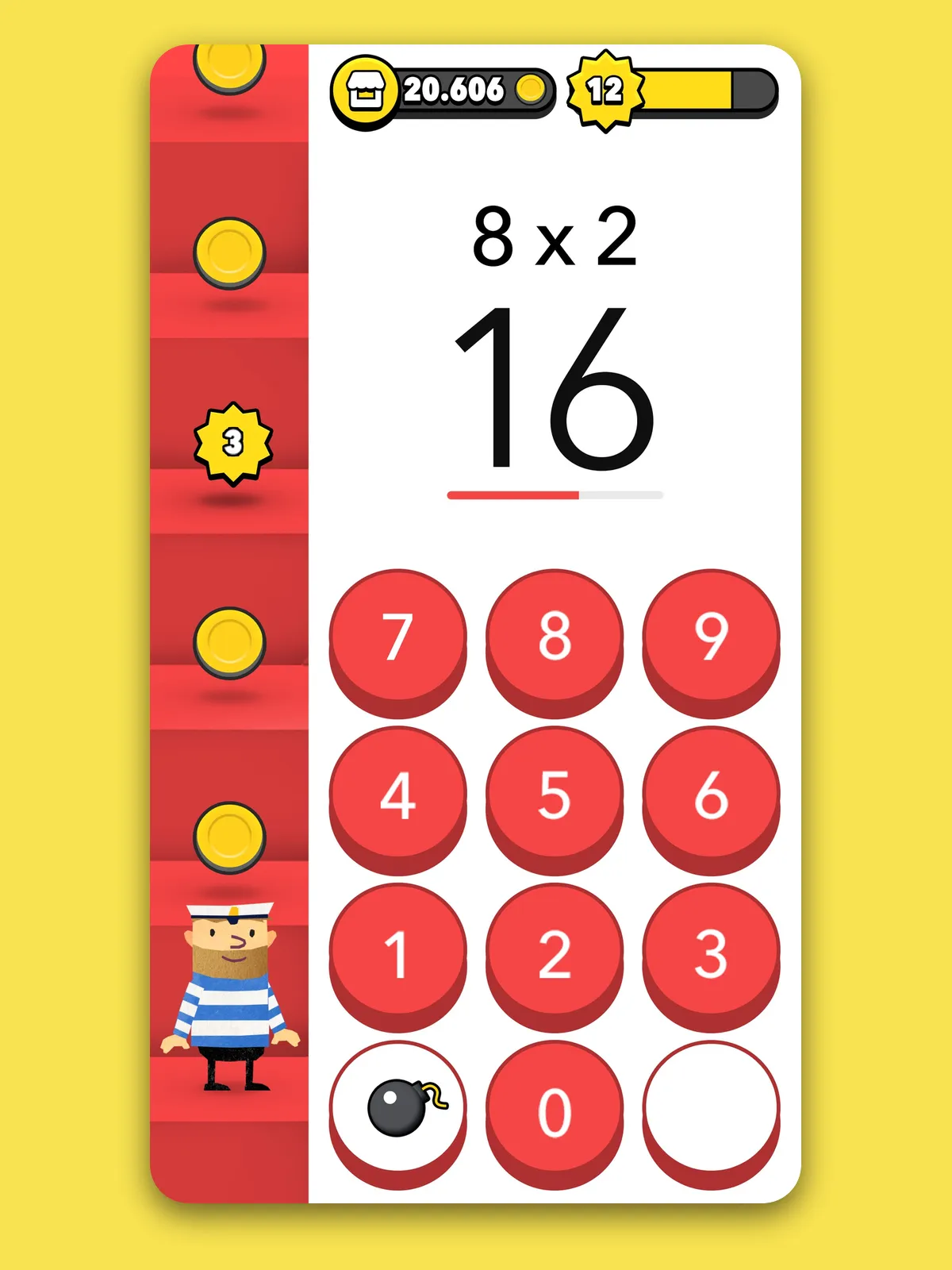
In *Fiete Math Climber*, children practice mental math, and every correct answer visibly moves them forward: Fiete jumps up one step on the staircase and collects coins along the way. This way, children solve many problems in just a few minutes—willingly and with joy. Whether it’s addition, subtraction, multiplication, or division—and whether the numbers go up to 10 or 1,000—the app grows with the child throughout elementary school.
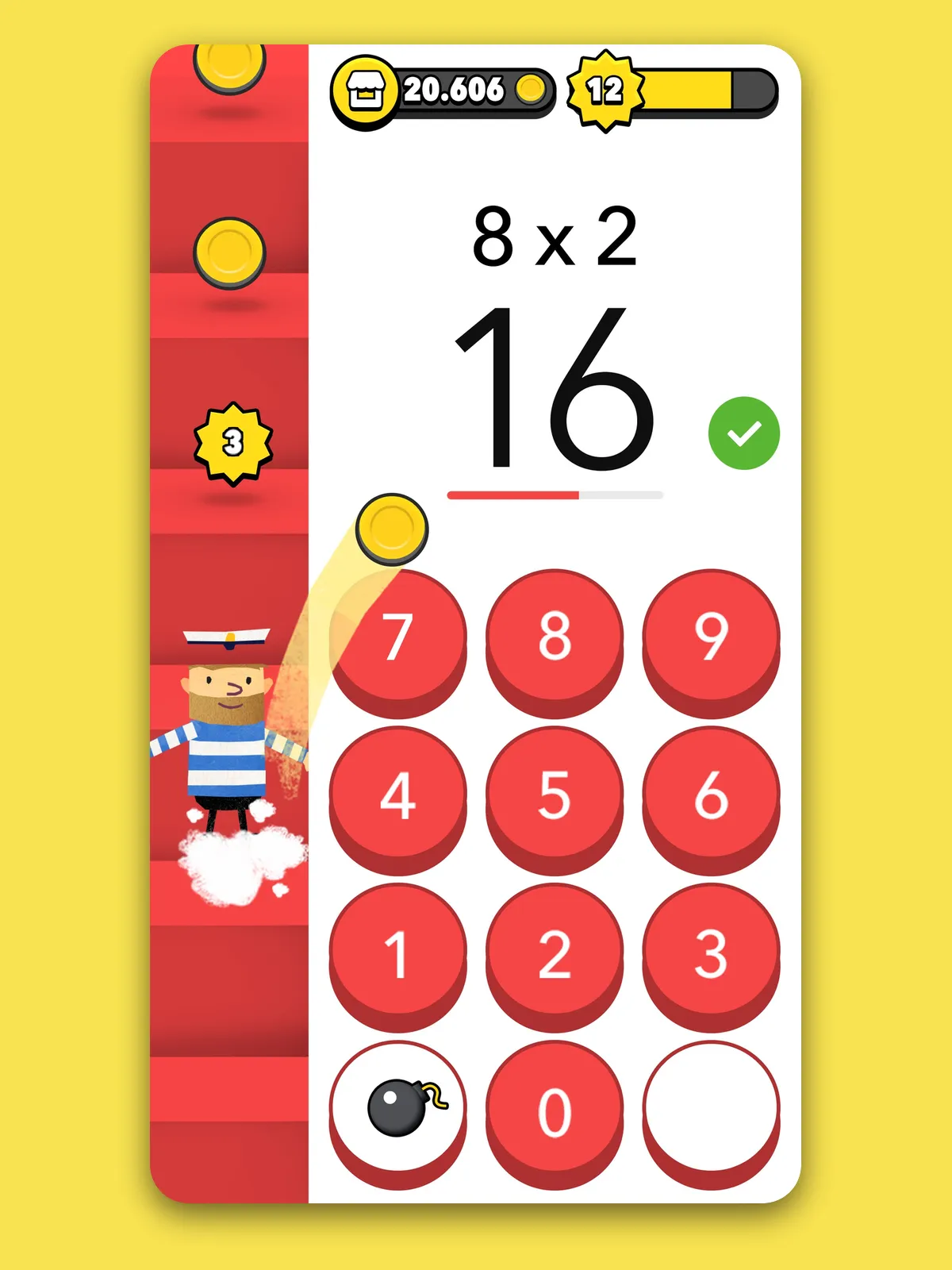
Every correct answer moves you up one level.
Why did we make the game?
Mental math takes practice, and practicing on paper can quickly become tedious. We wanted children to enjoy doing math, not because they have to. In our tests, children voluntarily solved hundreds of problems in a short amount of time. The secret is simple: Every success is immediately visible, and no mistake carries much weight.
Rules of the Game
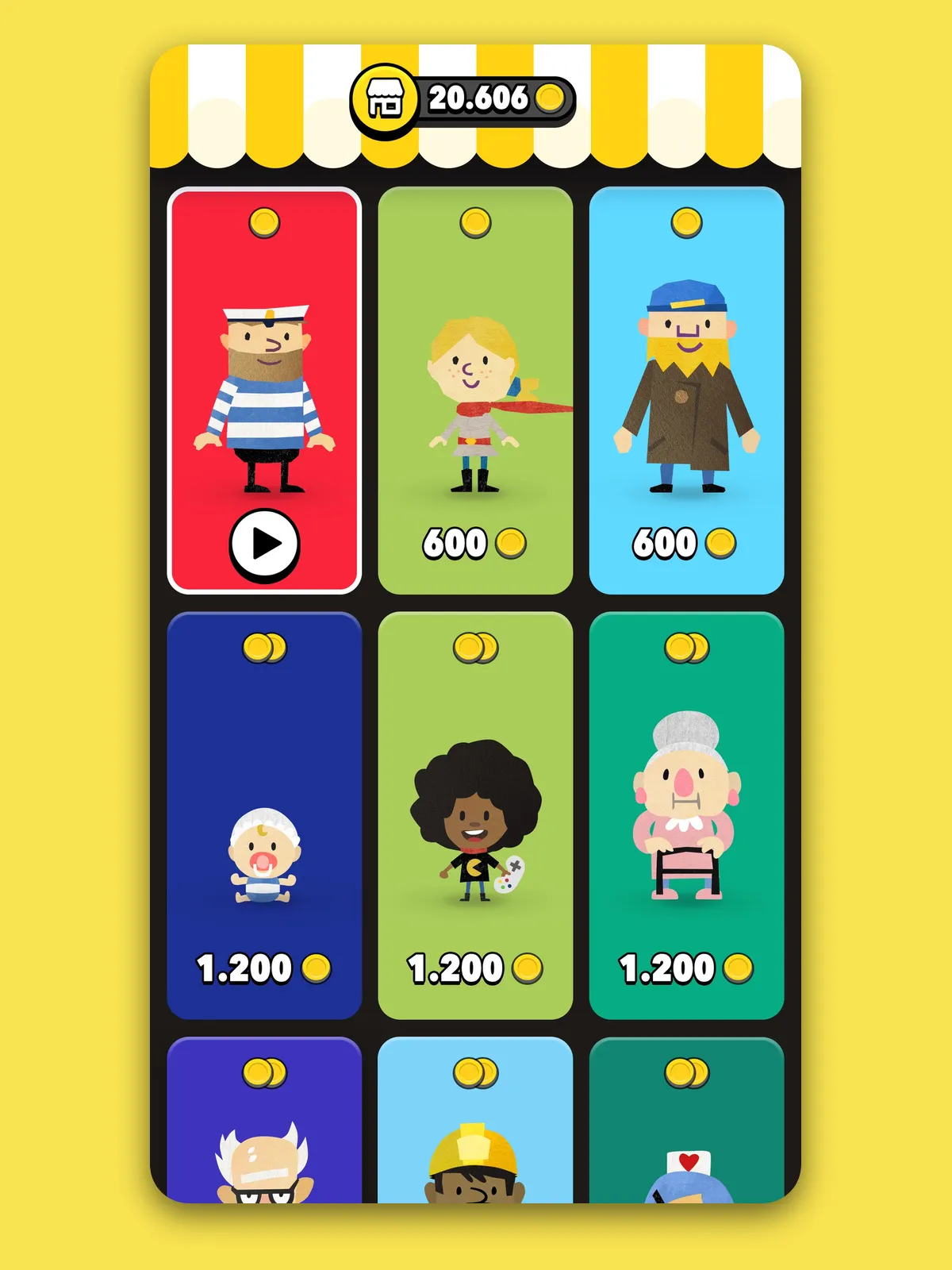
The screen displays a problem, with a number grid below it. If the answer is correct, Fiete moves up one step and earns a coin. If it’s wrong, he moves down one step. Children use the coins to unlock new characters, ranging from an astronaut to a penguin. The app continuously adjusts the difficulty level. Children can skip questions that are too hard, and they can make the practice sets easier or harder.
What makes it special?
Fiete Math Climber combines a clear, uncluttered math interface with rewards that keep kids motivated for a long time: lots of collectible characters, chests, and bonus coins. You can customize what’s practiced: number ranges, types of calculations, time per problem, and specific multiplication tables. This way, each practice session aligns perfectly with what’s currently being covered in school.
What Your Child Learns While Playing
Confident Mental Math
By doing many short problems in a row, addition, subtraction, multiplication, and division become second nature. What is practiced often sticks, and children calculate faster and with greater confidence.
The Basics
Students can practice specific sequences. This allows children to focus on the sequences they still find difficult without getting bored by doing problems they already know.
Stamina and Concentration
The stairs make every step of progress visible. Children stay on track because they can see how far they've come, and they learn to focus on one thing over an extended period of time.
Confidence in Math
The difficulty increases gradually and adapts to the child. A mistake costs only one level. This way, children see math as something they can do.
Only in 
Fiete Math Climber
Practice mental math, moving up one level at a time